


 Home
>
News
>
Blog
>
Application Advantages and On-the-Ground Value of Unified Communications in Countries with Weak Infrastructure
Home
>
News
>
Blog
>
Application Advantages and On-the-Ground Value of Unified Communications in Countries with Weak InfrastructureApplication Advantages and On-the-Ground Value of Unified Communications in Countries with Weak Infrastructure
release date:2026-06-29
In many developing countries and remote regions, communication infrastructure is notoriously weak: sparse base station coverage, unstable networks, vast signal-free areas in mountains and border zones, natural disasters that can paralyze entire networks, insufficient fiber-optic deployment, and limited maintenance capabilities. Traditional communication relies heavily on public networks and fails outside urban centers, leaving public safety agencies grappling with large dead zones, frequent loss of contact, delayed command, and poor inter-agency coordination. Unified communications, with its low infrastructure dependency, strong environmental adaptability, and integrated design, is a perfect fit for these realities.
First, the public-private hybrid architecture breaks free from absolute reliance on carrier networks. In cities, the system can use existing 4G/5G networks for long-distance voice and multimedia dispatch. In suburbs, moutains, jungles, and border areas without coverage, it rapidly self-deploys a private network using dedicated base stations, portable repeaters, and vehicle-mounted units—without large-scale trenching, fiber-optic cabling, or tower construction. Deployment is quick, flexible, and low-cost. Even when disasters knock out public networks, the private network continues to operate independently, keeping the emergency communication lifeline alive—solving the fatal problem of "no network, no contact."
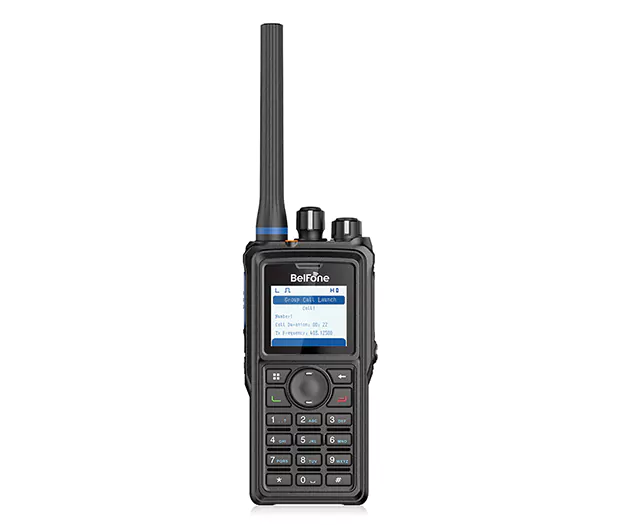
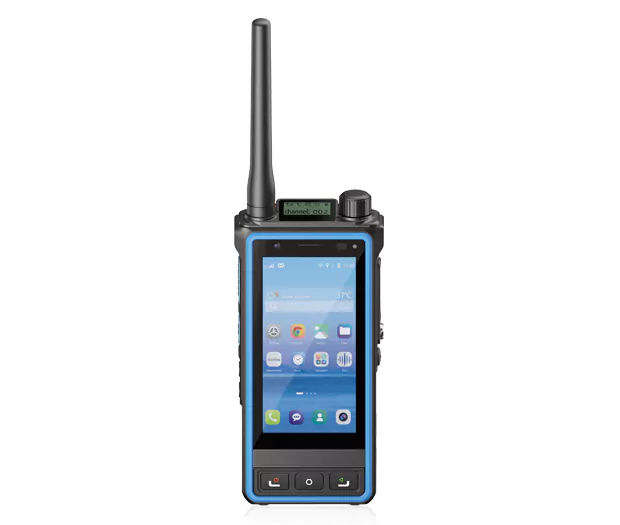
Second, one system replaces multiple standalone systems, dramatically reducing construction and maintenance burdens. Traditional approaches require separate systems for police radios, fire communications, emergency command, site security, and public alerts—disparate, incompatible equipment with high build and upkeep costs. A unified communications platform enables unified access across all terminals, including two-way radios, vehicle-mounted radios, command boxes, body cameras, CCTV, broadcast devices, and positioning terminals—integrating voice, video, positioning, alerts, dispatch, and recording into a single platform. This truly delivers "one build, multiple uses, shared across departments," reducing redundant investment and lowering maintenance complexity.
Third, it rapidly fills gaps in public safety governance and enables modern, flattened command structures. In countries with weak infrastructure, agencies often operate in silos with poor information sharing and cumbersome hierarchies. Unified communications breaks down barriers, allowing ad hoc joint groups to be formed at any time for police, fire, municipal, and rescue teams. The command center can directly reach frontline officers and on-site vehicles, bypassing middlemen, and achieve visual, flattened, and precise command—greatly improving emergency response speed and multi-agency coordination.
In summary, for countries and regions with weak infrastructure, complex geography, limited budgets, and underdeveloped emergency systems, unified communications is not a luxury—it is the most appropriate, cost-effective, and practical modern public safety solution available. With its low infrastructure dependency, high adaptability, integrated design, and exceptional reliability, it solves the problems that traditional systems cannot: lack of coverage, lack of fallback, and lack of coordination. It helps less developed regions rapidly build a stable, efficient, and sustainable public safety emergency communications framework.
First, the public-private hybrid architecture breaks free from absolute reliance on carrier networks. In cities, the system can use existing 4G/5G networks for long-distance voice and multimedia dispatch. In suburbs, moutains, jungles, and border areas without coverage, it rapidly self-deploys a private network using dedicated base stations, portable repeaters, and vehicle-mounted units—without large-scale trenching, fiber-optic cabling, or tower construction. Deployment is quick, flexible, and low-cost. Even when disasters knock out public networks, the private network continues to operate independently, keeping the emergency communication lifeline alive—solving the fatal problem of "no network, no contact."
Second, one system replaces multiple standalone systems, dramatically reducing construction and maintenance burdens. Traditional approaches require separate systems for police radios, fire communications, emergency command, site security, and public alerts—disparate, incompatible equipment with high build and upkeep costs. A unified communications platform enables unified access across all terminals, including two-way radios, vehicle-mounted radios, command boxes, body cameras, CCTV, broadcast devices, and positioning terminals—integrating voice, video, positioning, alerts, dispatch, and recording into a single platform. This truly delivers "one build, multiple uses, shared across departments," reducing redundant investment and lowering maintenance complexity.
Third, it rapidly fills gaps in public safety governance and enables modern, flattened command structures. In countries with weak infrastructure, agencies often operate in silos with poor information sharing and cumbersome hierarchies. Unified communications breaks down barriers, allowing ad hoc joint groups to be formed at any time for police, fire, municipal, and rescue teams. The command center can directly reach frontline officers and on-site vehicles, bypassing middlemen, and achieve visual, flattened, and precise command—greatly improving emergency response speed and multi-agency coordination.
In summary, for countries and regions with weak infrastructure, complex geography, limited budgets, and underdeveloped emergency systems, unified communications is not a luxury—it is the most appropriate, cost-effective, and practical modern public safety solution available. With its low infrastructure dependency, high adaptability, integrated design, and exceptional reliability, it solves the problems that traditional systems cannot: lack of coverage, lack of fallback, and lack of coordination. It helps less developed regions rapidly build a stable, efficient, and sustainable public safety emergency communications framework.







Technical support: Longcai Technology
