


 Home
>
News
>
Blog
>
Civilian Walkie Talkies: A Versatile Tool for Daily and Recreational Communication
Home
>
News
>
Blog
>
Civilian Walkie Talkies: A Versatile Tool for Daily and Recreational CommunicationCivilian Walkie Talkies: A Versatile Tool for Daily and Recreational Communication
release date:2026-01-28
Civilian walkie talkies, also known as consumer two-way radios, are compact, user-friendly communication devices designed for non-professional use, bridging the gap between instant connectivity and convenience in daily life, outdoor adventures, and social gatherings. Unlike their rugged, frequency-optimized professional counterparts used by emergency services or industrial teams, civilian walkie talkies prioritize ease of operation, affordability, and adaptability to casual scenarios, making them a popular choice for individuals seeking reliable, wireless communication without relying on cellular networks.
One of the core advantages of civilian walkie talkies is their independence from mobile signal coverage—a feature that sets them apart from smartphones and makes them indispensable in environments where cellular service is weak or non-existent. Whether exploring remote hiking trails, camping in national parks, or boating on open waters, these devices enable real-time communication between group members within a limited range (typically 1 to 5 miles for basic models, extending to 20+ miles for high-power, weather-resistant versions in open terrain). This connectivity is not only convenient but also enhances safety: hikers can alert teammates to route changes or emergencies, campers can coordinate meal preparations or night patrols, and boaters can stay in touch with shore or other vessels without relying on unstable cell signals.
Beyond outdoor activities, civilian walkie talkies find practical applications in everyday and social settings. At large family gatherings, such as weddings, barbecues, or reunions, they allow relatives to stay connected without shouting or chasing each other across crowded spaces—parents can keep tabs on children playing nearby, while hosts coordinate with caterers or event staff. In residential communities, neighbors might use them during neighborhood watches, holiday decorations, or emergency preparedness drills to share updates efficiently. They also serve as a fun and educational tool for children, teaching them basic communication etiquette and responsibility while enabling playful interactions with friends or siblings, often with colorful, compact designs tailored to young users.
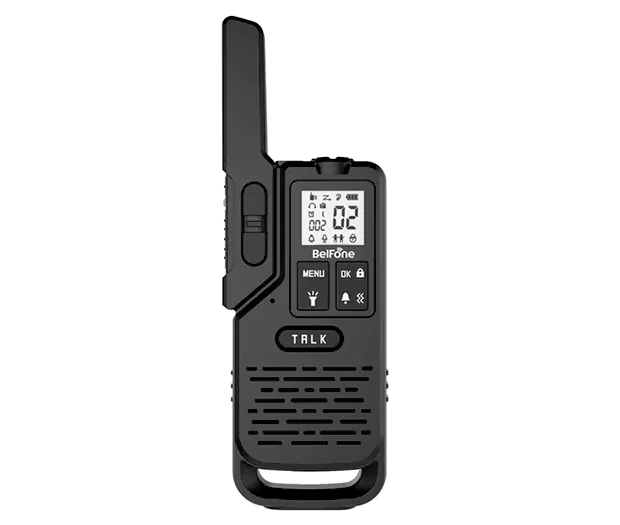
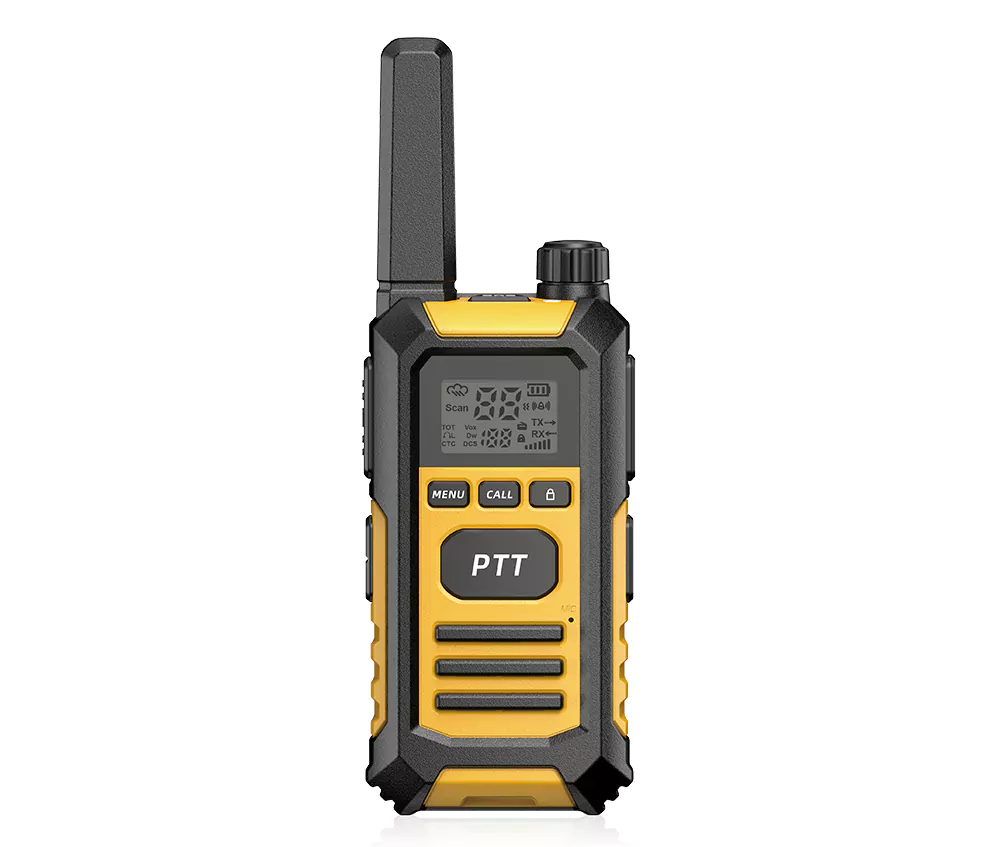
Modern civilian walkie talkies come with a range of user-centric features that enhance their functionality and accessibility. Most operate on the Family Radio Service (FRS) or General Mobile Radio Service (GMRS) frequencies—license-free bands in many countries, including the United States, eliminating the need for complicated regulatory procedures. They often include channel scanning, which automatically searches for active frequencies; privacy codes (CTCSS/DCS), which filter out unwanted chatter from other users on the same channel; and rechargeable batteries or low-power modes for extended use. High-end models may add weather alerts, hands-free vox (voice-activated transmission), and water resistance, catering to outdoor enthusiasts who need durability in harsh conditions.
While civilian walkie talkies are designed for casual use, users must adhere to basic regulations to ensure interference-free communication. For example, GMRS frequencies in some regions require a simple license (though FRS is typically license-free), and power output is limited to prevent disruption to professional radio services. Additionally, avoiding overcrowded channels and using privacy codes responsibly helps maintain clear communication for all users. These minor considerations aside, civilian walkie talkies remain a cost-effective, reliable alternative to cellular communication, offering a unique blend of simplicity, portability, and safety that makes them a staple for outdoor adventurers, families, and anyone seeking instant, direct connectivity.
One of the core advantages of civilian walkie talkies is their independence from mobile signal coverage—a feature that sets them apart from smartphones and makes them indispensable in environments where cellular service is weak or non-existent. Whether exploring remote hiking trails, camping in national parks, or boating on open waters, these devices enable real-time communication between group members within a limited range (typically 1 to 5 miles for basic models, extending to 20+ miles for high-power, weather-resistant versions in open terrain). This connectivity is not only convenient but also enhances safety: hikers can alert teammates to route changes or emergencies, campers can coordinate meal preparations or night patrols, and boaters can stay in touch with shore or other vessels without relying on unstable cell signals.
Beyond outdoor activities, civilian walkie talkies find practical applications in everyday and social settings. At large family gatherings, such as weddings, barbecues, or reunions, they allow relatives to stay connected without shouting or chasing each other across crowded spaces—parents can keep tabs on children playing nearby, while hosts coordinate with caterers or event staff. In residential communities, neighbors might use them during neighborhood watches, holiday decorations, or emergency preparedness drills to share updates efficiently. They also serve as a fun and educational tool for children, teaching them basic communication etiquette and responsibility while enabling playful interactions with friends or siblings, often with colorful, compact designs tailored to young users.
Modern civilian walkie talkies come with a range of user-centric features that enhance their functionality and accessibility. Most operate on the Family Radio Service (FRS) or General Mobile Radio Service (GMRS) frequencies—license-free bands in many countries, including the United States, eliminating the need for complicated regulatory procedures. They often include channel scanning, which automatically searches for active frequencies; privacy codes (CTCSS/DCS), which filter out unwanted chatter from other users on the same channel; and rechargeable batteries or low-power modes for extended use. High-end models may add weather alerts, hands-free vox (voice-activated transmission), and water resistance, catering to outdoor enthusiasts who need durability in harsh conditions.
While civilian walkie talkies are designed for casual use, users must adhere to basic regulations to ensure interference-free communication. For example, GMRS frequencies in some regions require a simple license (though FRS is typically license-free), and power output is limited to prevent disruption to professional radio services. Additionally, avoiding overcrowded channels and using privacy codes responsibly helps maintain clear communication for all users. These minor considerations aside, civilian walkie talkies remain a cost-effective, reliable alternative to cellular communication, offering a unique blend of simplicity, portability, and safety that makes them a staple for outdoor adventurers, families, and anyone seeking instant, direct connectivity.





Technical support: Longcai Technology
