


 Home
>
News
>
Blog
>
how to choose the right communication tools in ultra low temperature condition during patroling
Home
>
News
>
Blog
>
how to choose the right communication tools in ultra low temperature condition during patrolinghow to choose the right communication tools in ultra low temperature condition during patroling
release date:2025-12-29
In outdoor patrol and inspection work, wireless communication devices are the core equipment that ensures real-time interaction between inspection personnel and the command center and guarantees the safe and efficient progress of the work. When confronted with ultra-low temperatures below -20℃, ordinary wireless communication devices often experience sudden drops in battery life, poor signal stability, and malfunction of body components, which seriously affect the normal conduct of inspection work. Therefore, for the patrol and inspection scenarios in outdoor ultra-low temperature weather, the scientific selection of suitable wireless communication equipment should closely focus on core demands such as low-temperature adaptability, communication stability, and battery life, and be comprehensively considered in combination with the signal coverage characteristics of the inspection environment and the actual work requirements.
Ultra-low temperature environments can have negative impacts on wireless communication devices from multiple dimensions, which is also the core pain point that needs to be prioritized and avoided when selecting equipment. Firstly, there is a decline in battery performance. Low temperatures can reduce the activity of the electrolyte inside lithium batteries, causing a significant reduction in battery capacity and even sudden power outages, which cannot support long-term inspection work. Secondly, there is the failure of hardware components. Low temperatures may cause frost to form on the device screen, touch control to malfunction, keys to become stuck, and metal parts such as antennas and interfaces to have poor contact due to thermal expansion and contraction. The last issue is the instability of communication signals. Low temperatures can affect the propagation characteristics of radio waves. Meanwhile, extreme weather conditions may be accompanied by wind, snow, thick fog, etc., further weakening the signal strength, leading to call interruptions, data transmission delays or failures. In addition, some inspection scenarios may also have complex terrains (such as mountainous areas, polar regions, and high-altitude deserts) and no public network coverage, further increasing the difficulty of selecting communication equipment.
So how to choose wireless communication equipment that can adapt to outdoor ultra-low temperature patrol and inspection?
This type of equipment usually undergoes special low-temperature optimization designs, such as using low-temperature-specific lithium batteries, providing cold protection for the body circuits, and selecting low-temperature-resistant shell materials, etc. At the same time, you can pay attention to whether the device has a battery preheating function, which can quickly activate the battery in extremely low temperatures to ensure the normal start-up of the device.
The BF-SCP810 multimode radio supports 4G full network compatibility dual SIM dual standby, making public network PoC applications more reliable and ensuring smooth and stable network signals during cross-regional and cross-network processes. It can easily achieve public network cluster communication without distance limitations. When the public network trunking communication system fails, BF-SCP810 can perform point-to-point full-duplex calls based on SIM cards. In the event that the public network completely fails, the BF-SCP810 can still be used as a narrowband radio, providing users with the last means of communication. It is not only a walkie-talkie but also an intelligent terminal for multi-means communication.
The BF-SCP810 supports multiple positioning methods. This enables the command center to quickly grasp the information of frontline personnel, supplemented by trajectory playback applications, regional selection applications and other data, providing refined command and efficient dispatch management for complex working environments It meets the needs of geographic information positioning in forest fire prevention, emergency rescue and other aspects.
Ultra-low temperature environments can have negative impacts on wireless communication devices from multiple dimensions, which is also the core pain point that needs to be prioritized and avoided when selecting equipment. Firstly, there is a decline in battery performance. Low temperatures can reduce the activity of the electrolyte inside lithium batteries, causing a significant reduction in battery capacity and even sudden power outages, which cannot support long-term inspection work. Secondly, there is the failure of hardware components. Low temperatures may cause frost to form on the device screen, touch control to malfunction, keys to become stuck, and metal parts such as antennas and interfaces to have poor contact due to thermal expansion and contraction. The last issue is the instability of communication signals. Low temperatures can affect the propagation characteristics of radio waves. Meanwhile, extreme weather conditions may be accompanied by wind, snow, thick fog, etc., further weakening the signal strength, leading to call interruptions, data transmission delays or failures. In addition, some inspection scenarios may also have complex terrains (such as mountainous areas, polar regions, and high-altitude deserts) and no public network coverage, further increasing the difficulty of selecting communication equipment.
So how to choose wireless communication equipment that can adapt to outdoor ultra-low temperature patrol and inspection?
(1) Low-temperature adaptability
This is the primary indicator for selecting equipment in ultra-low temperature scenarios, and it is necessary to pay close attention to the working temperature range of the equipment. Give priority to choosing devices marked with "ultra-low temperature compatibility" and IP68 protection.This type of equipment usually undergoes special low-temperature optimization designs, such as using low-temperature-specific lithium batteries, providing cold protection for the body circuits, and selecting low-temperature-resistant shell materials, etc. At the same time, you can pay attention to whether the device has a battery preheating function, which can quickly activate the battery in extremely low temperatures to ensure the normal start-up of the device.
(2) Communication stability and coverage
Select the corresponding type of communication technology based on the signal environment of the inspection scene: If the inspection area is covered by public networks (4G/5G), industrial-grade 4G/5G walkie-talkies or intelligent inspection terminals that support ultra-low temperature working conditions should be given priority. These devices have stronger signal receiving capabilities and can stably connect to the public network in low-temperature environments, achieving functions such as voice calls, real-time positioning, and data upload. If the inspection area is not covered by public networks (such as remote mountainous areas or uninhabited areas), ultrashort wave walkie-talkies should be selected, combined with high-gain antennas, to ensure short-distance communication by taking advantage of the line-of-sight propagation characteristics of ultrashort waves, or devices with satellite communication functions can be chosen to achieve stable communication worldwide through satellite links, completely getting rid of the reliance on ground networks.The BF-SCP810 multimode radio supports 4G full network compatibility dual SIM dual standby, making public network PoC applications more reliable and ensuring smooth and stable network signals during cross-regional and cross-network processes. It can easily achieve public network cluster communication without distance limitations. When the public network trunking communication system fails, BF-SCP810 can perform point-to-point full-duplex calls based on SIM cards. In the event that the public network completely fails, the BF-SCP810 can still be used as a narrowband radio, providing users with the last means of communication. It is not only a walkie-talkie but also an intelligent terminal for multi-means communication.
The BF-SCP810 supports multiple positioning methods. This enables the command center to quickly grasp the information of frontline personnel, supplemented by trajectory playback applications, regional selection applications and other data, providing refined command and efficient dispatch management for complex working environments It meets the needs of geographic information positioning in forest fire prevention, emergency rescue and other aspects.
(3) Battery life
Battery life will be significantly shortened in ultra-low temperature environments, so the battery life of the device needs to far exceed daily requirements. Give priority to devices equipped with large-capacity low-temperature lithium batteries. The battery capacity is recommended to be no less than 5000mAh. At the same time, pay attention to whether the device supports low-power mode and can reduce power consumption when not in operation. In addition, devices that support detachable batteries or external power sources can be selected to facilitate inspection personnel to carry spare batteries for timely replacement, or to recharge through a mobile power bank, ensuring that the equipment can support inspection work throughout the day or even longer.(4) Protective performance and durability
Outdoor inspections are often accompanied by severe weather conditions such as wind, snow, and sandstorms. In ultra-low temperature environments, the structural stability of equipment is even more crucial. It is necessary to select equipment with a protection level of no less than IP67 to ensure that the equipment has the capabilities of dust-proof, water-proof and shock-proof, and can withstand wind and snow invasion and accidental drops. Meanwhile, the buttons, interfaces and other components of the equipment need to be reinforced in design to prevent damage caused by low-temperature embrittlement. The shell material should preferably be engineering plastics or metals that are resistant to low temperatures and impacts to ensure the durability of the equipment in extreme environments.(5) Functional adaptability
In light of the actual work requirements of patrol and inspection, pay attention to the additional functions of the equipment. For instance, whether it is equipped with positioning function, which can accurately feedback the location of inspection personnel and ensure their safety; Does it support clocking in at patrol points (such as NFC or RFID) to facilitate the recording of inspection trajectories and work progress? Does it have voice broadcast and emergency call functions, and can quickly send out distress signals in sudden situations? For intelligent inspection terminals, it is also necessary to pay attention to whether they support screen touch control in low-temperature environments and whether they can run dedicated inspection apps to achieve functions such as data entry and fault reporting. In outdoor activities such as exploration, forest areas, the wild, and emergency rescue, the BelFone BF-TD588UV can automatically report the location of personnel and transmit information in real time without a network connection by using the simulated APRS function, ensuring that the location of teammates can be monitored in real time in mountainous areas and other regions without communication network coverage and with complex terrain.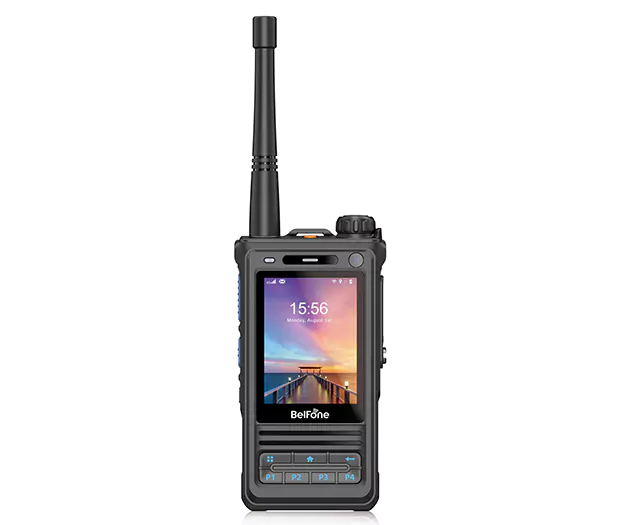





Technical support: Longcai Technology
