


The Key Differences Between HAM Radios and Walkie-Talkies
release date:2025-12-25
While HAM radios and walkie-talkies both fall under the umbrella of two-way radio communication, they differ dramatically in design purpose, functionality, legal requirements, and user scope. These distinctions cater to entirely different use cases, from casual short-range communication to professional, long-distance radio operations.
Walkie-talkies, also known as FRS (Family Radio Service) or GMRS (General Mobile Radio Service) radios in some regions, are designed for simplified, short-range, and immediate communication. They typically operate on license-free (or easily obtainable license) UHF/VHF frequencies with low power output—usually 0.5–5 watts. Built for portability and ease of use, most consumer-grade walkie-talkies feature push-to-talk (PTT) buttons, pre-set channels, and minimal customization options. Their communication range is limited, often 1–5 kilometers in open areas and even shorter in urban or forested environments with obstacles. Common applications include family outings, team coordination at events, warehouse operations, or hotels staff communication. Users do not need specialized knowledge to operate them; simply turn on the device, select a shared channel, and start talking.
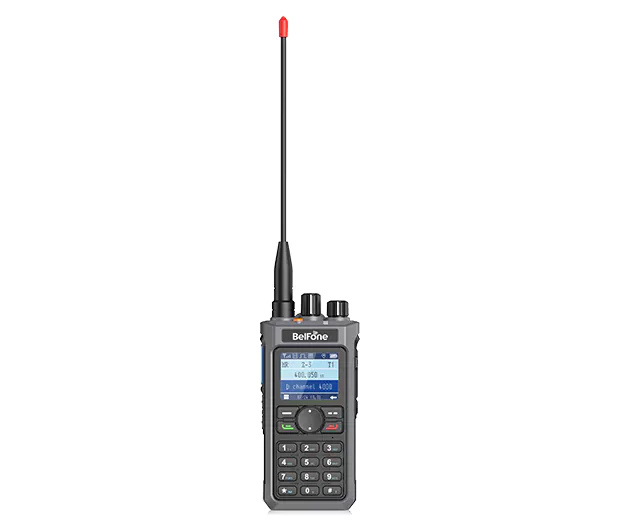
HAM radios, on the other hand, are highly versatile, long-range communication systems tailored for licensed amateur radio enthusiasts (called “hams”). They operate across a vast spectrum of frequencies—including HF, VHF, UHF, and even microwave bands—with power outputs ranging from a few watts to over 100 watts for base stations. What sets HAM radios apart is their ability to achieve global communication: with the right equipment and propagation conditions, hams can contact fellow enthusiasts across continents via ionospheric reflection of HF signals. HAM radios also offer extensive customization, such as adjustable frequencies, modulation modes (AM, FM, SSB, digital), and compatibility with accessories like external antennas, amplifiers, and digital repeaters. Legally, operating a HAM radio requires passing an official exam to obtain a license, which ensures users understand radio wave regulations, etiquette, and technical safety to avoid interfering with commercial or emergency communications. Beyond casual chatting, hams use their radios for emergency response during natural disasters, scientific experimentation, and community service communication networks.
In summary, the core gap lies in accessibility vs. capability: walkie-talkies are user-friendly tools for short-range, on-site coordination, while HAM radios are powerful, licensed systems for long-distance, flexible, and hobbyist-focused communication.
Walkie-talkies, also known as FRS (Family Radio Service) or GMRS (General Mobile Radio Service) radios in some regions, are designed for simplified, short-range, and immediate communication. They typically operate on license-free (or easily obtainable license) UHF/VHF frequencies with low power output—usually 0.5–5 watts. Built for portability and ease of use, most consumer-grade walkie-talkies feature push-to-talk (PTT) buttons, pre-set channels, and minimal customization options. Their communication range is limited, often 1–5 kilometers in open areas and even shorter in urban or forested environments with obstacles. Common applications include family outings, team coordination at events, warehouse operations, or hotels staff communication. Users do not need specialized knowledge to operate them; simply turn on the device, select a shared channel, and start talking.
HAM radios, on the other hand, are highly versatile, long-range communication systems tailored for licensed amateur radio enthusiasts (called “hams”). They operate across a vast spectrum of frequencies—including HF, VHF, UHF, and even microwave bands—with power outputs ranging from a few watts to over 100 watts for base stations. What sets HAM radios apart is their ability to achieve global communication: with the right equipment and propagation conditions, hams can contact fellow enthusiasts across continents via ionospheric reflection of HF signals. HAM radios also offer extensive customization, such as adjustable frequencies, modulation modes (AM, FM, SSB, digital), and compatibility with accessories like external antennas, amplifiers, and digital repeaters. Legally, operating a HAM radio requires passing an official exam to obtain a license, which ensures users understand radio wave regulations, etiquette, and technical safety to avoid interfering with commercial or emergency communications. Beyond casual chatting, hams use their radios for emergency response during natural disasters, scientific experimentation, and community service communication networks.
In summary, the core gap lies in accessibility vs. capability: walkie-talkies are user-friendly tools for short-range, on-site coordination, while HAM radios are powerful, licensed systems for long-distance, flexible, and hobbyist-focused communication.





Technical support: Longcai Technology
