


How Does Walkie-Talkie Wattage Affect Communication Distance?
release date:2026-02-26
Walkie-talkies are widely used in various scenarios, from daily work coordination to emergency response, and their communication distance is one of the most critical performance indicators. Among the many factors affecting communication distance—such as environmental obstacles, antenna quality, and weather conditions—transmit wattage is the core factor that directly determines the maximum potential communication range of a walkie-talkie. Different wattage levels correspond to distinct communication distances, and understanding these differences is essential for choosing the right device for specific needs.
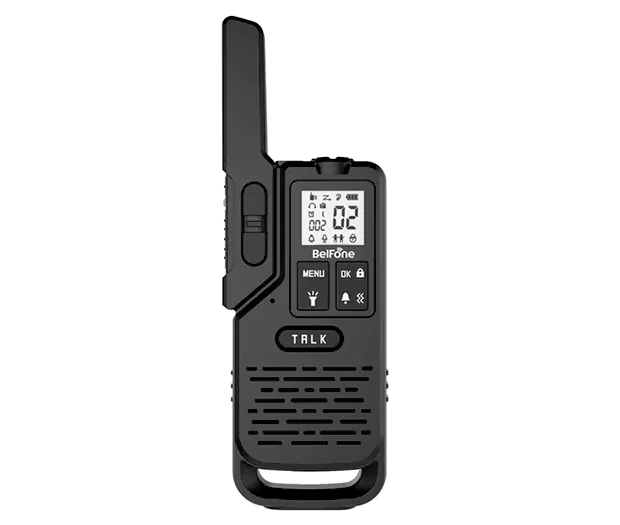
Low-wattage walkie-talkies, typically ranging from 0.5 to 2 watts, are designed for short-range communication and are ideal for indoor or small-scale outdoor use. In an open, unobstructed environment (such as an empty field), a 0.5-watt walkie-talkie can achieve a communication distance of 0.5 to 1 mile (about 0.8 to 1.6 kilometers). For 1 to 2-watt models, the distance can extend to 1 to 3 miles (1.6 to 4.8 kilometers) in open areas. However, when used indoors (such as offices, shopping malls, or warehouses) or in areas with obstacles like buildings, trees, or walls, the distance will be significantly reduced—often to just a few hundred feet. These low-wattage devices are energy-efficient, compact, and suitable for scenarios like retail store coordination, small team activities, or home use, where users do not need long-distance communication.
Medium-wattage walkie-talkies, with wattage ranging from 3 to 5 watts, strike a balance between communication range and portability, making them the most commonly used type in professional settings. In open, unobstructed conditions, a 3-watt walkie-talkie can reach 3 to 5 miles (4.8 to 8 kilometers), while a 5-watt model can extend to 5 to 8 miles (8 to 12.9 kilometers). Compared to low-wattage models, they perform much better in semi-obstructed environments, such as suburban areas with scattered buildings or outdoor worksites with moderate vegetation. The communication distance may decrease to 1 to 3 miles (1.6 to 4.8 kilometers) in these scenarios, but they still maintain reliable connectivity. Medium-wattage walkie-talkies are widely used in construction sites, security patrols, event management, and outdoor adventure teams, where users need longer range than low-wattage devices but still value portability.
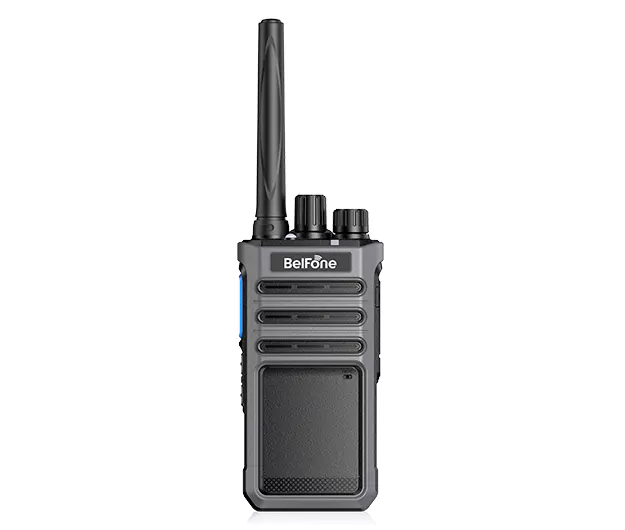
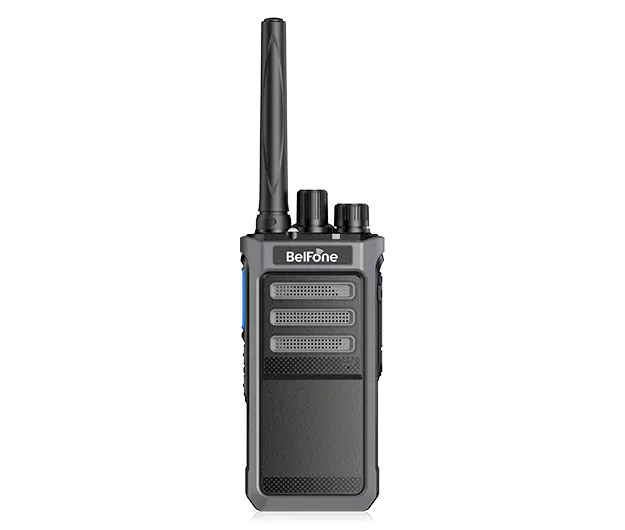
High-wattage walkie-talkies, usually 10 watts or higher, are designed for long-distance communication in large-scale or remote environments. In ideal open conditions (such as deserts, oceans, or flat rural areas), a 10-watt walkie-talkie can achieve a communication distance of 10 to 20 miles (16 to 32 kilometers), and higher wattage models (15 to 50 watts) can even reach 20 to 50 miles (32 to 80 kilometers) or more with the help of high-gain antennas. However, these devices are larger, heavier, and consume more power than low or medium-wattage models. They are mainly used in scenarios that require long-range, reliable communication, such as emergency rescue in remote areas, forest fire prevention, maritime communication, and large-scale industrial sites. It should be noted that high-wattage walkie-talkies may require professional licenses in some regions, as their strong signals may interfere with other communication devices.
It is important to emphasize that the above distance ranges are ideal values. In real-world use, communication distance is often affected by many external factors. For example, buildings, mountains, and dense forests will block and weaken radio signals, reducing the effective distance by 30% to 70%. Bad weather (such as heavy rain, fog, or strong winds) can also interfere with signal transmission. Additionally, the quality of the antenna, battery power, and even the height of the user’s position (e.g., using the walkie-talkie on a high floor or hilltop) can impact the communication range.
Low-wattage walkie-talkies, typically ranging from 0.5 to 2 watts, are designed for short-range communication and are ideal for indoor or small-scale outdoor use. In an open, unobstructed environment (such as an empty field), a 0.5-watt walkie-talkie can achieve a communication distance of 0.5 to 1 mile (about 0.8 to 1.6 kilometers). For 1 to 2-watt models, the distance can extend to 1 to 3 miles (1.6 to 4.8 kilometers) in open areas. However, when used indoors (such as offices, shopping malls, or warehouses) or in areas with obstacles like buildings, trees, or walls, the distance will be significantly reduced—often to just a few hundred feet. These low-wattage devices are energy-efficient, compact, and suitable for scenarios like retail store coordination, small team activities, or home use, where users do not need long-distance communication.
Medium-wattage walkie-talkies, with wattage ranging from 3 to 5 watts, strike a balance between communication range and portability, making them the most commonly used type in professional settings. In open, unobstructed conditions, a 3-watt walkie-talkie can reach 3 to 5 miles (4.8 to 8 kilometers), while a 5-watt model can extend to 5 to 8 miles (8 to 12.9 kilometers). Compared to low-wattage models, they perform much better in semi-obstructed environments, such as suburban areas with scattered buildings or outdoor worksites with moderate vegetation. The communication distance may decrease to 1 to 3 miles (1.6 to 4.8 kilometers) in these scenarios, but they still maintain reliable connectivity. Medium-wattage walkie-talkies are widely used in construction sites, security patrols, event management, and outdoor adventure teams, where users need longer range than low-wattage devices but still value portability.
High-wattage walkie-talkies, usually 10 watts or higher, are designed for long-distance communication in large-scale or remote environments. In ideal open conditions (such as deserts, oceans, or flat rural areas), a 10-watt walkie-talkie can achieve a communication distance of 10 to 20 miles (16 to 32 kilometers), and higher wattage models (15 to 50 watts) can even reach 20 to 50 miles (32 to 80 kilometers) or more with the help of high-gain antennas. However, these devices are larger, heavier, and consume more power than low or medium-wattage models. They are mainly used in scenarios that require long-range, reliable communication, such as emergency rescue in remote areas, forest fire prevention, maritime communication, and large-scale industrial sites. It should be noted that high-wattage walkie-talkies may require professional licenses in some regions, as their strong signals may interfere with other communication devices.
It is important to emphasize that the above distance ranges are ideal values. In real-world use, communication distance is often affected by many external factors. For example, buildings, mountains, and dense forests will block and weaken radio signals, reducing the effective distance by 30% to 70%. Bad weather (such as heavy rain, fog, or strong winds) can also interfere with signal transmission. Additionally, the quality of the antenna, battery power, and even the height of the user’s position (e.g., using the walkie-talkie on a high floor or hilltop) can impact the communication range.





Technical support: Longcai Technology
