


How Long-Range Walkie-Talkies Work
release date:2025-12-29
Long-range walkie-talkies, also known as professional two-way radios, operate on a simple yet robust principle of radio wave transmission and reception—but their ability to cover extended distances relies on key design features and operational techniques that set them apart from consumer-grade models.
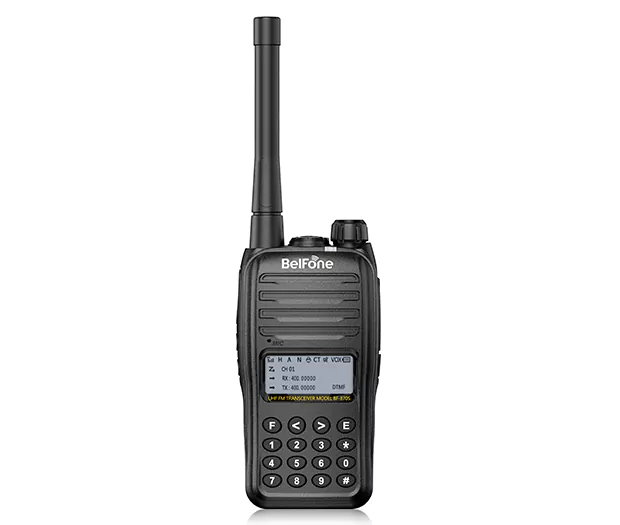
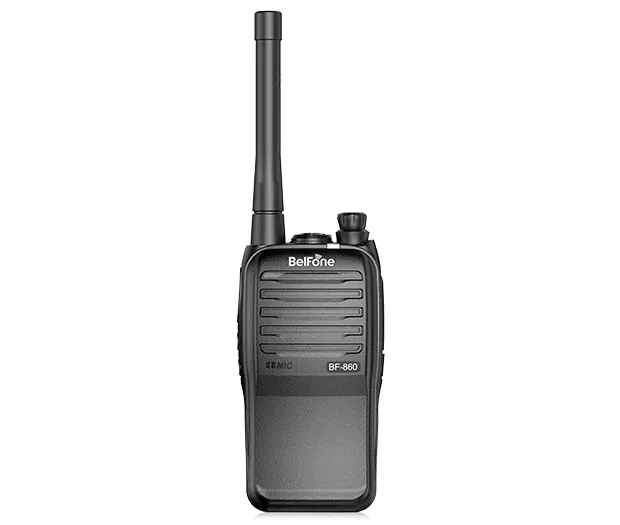
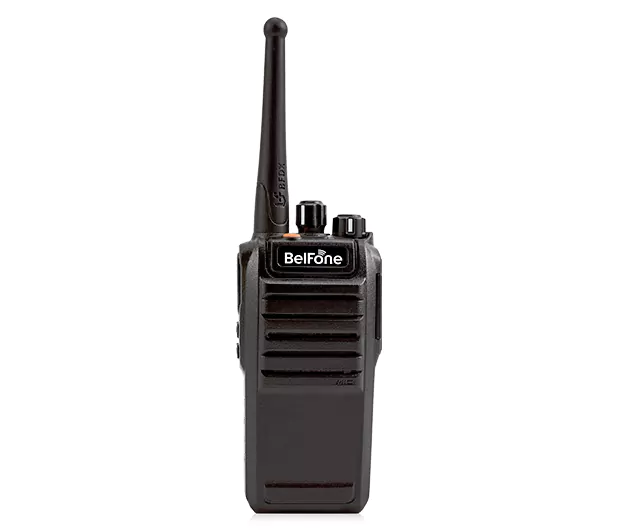
At their core, these devices function as half-duplex communication tools, meaning they use a single frequency band to send and receive signals (unlike full-duplex cell phones that can transmit and receive simultaneously). Most long-range walkie-talkies operate on UHF (Ultra High Frequency) or VHF (Very High Frequency) bands; VHF signals excel at travelling long distances over open terrain, while UHF signals perform better in urban or wooded areas with obstacles like buildings or trees. To boost range, professional units are equipped with high-gain antennas—longer, more efficient antennas that can capture and transmit weaker signals over farther distances, compared to the short, compact antennas on consumer walkie-talkies.
The most critical factor for extending communication range, however, is the use of repeaters. These dedicated devices are typically mounted on high structures like towers or hills, where they receive low-power signals from walkie-talkies, amplify them, and retransmit them at a higher power over a broader area. A single repeater can expand a walkie-talkie’s effective range from a few miles to 20–50 miles or more, depending on the repeater’s elevation and power output. Many long-range two-way radios are programmed to work with specific repeater networks, allowing users to tap into these extended coverage areas with the push of a button.
Power also plays a vital role: long-range walkie-talkies are fitted with high-capacity batteries and higher-power transmitters (ranging from 4 to 10 watts, versus 0.5–2 watts for consumer models). More transmission power means stronger signals that can penetrate obstacles and reach farther, even without a repeater. Additionally, advanced features like noise-canceling technology and signal compression algorithms help filter out interference, ensuring clear communication even when signals travel over long distances or through challenging environments.
In open, unobstructed areas—such as rural fields, mountain ranges, or coastal regions—long-range walkie-talkies can achieve impressive distances without repeaters, thanks to line-of-sight propagation of radio waves. But in most real-world scenarios, their long-range capability hinges on the synergy of powerful transmitters, high-gain antennas, and repeater networks, making them indispensable tools for industries like agriculture, construction, emergency services, and outdoor expeditions where reliable, long-distance communication is non-negotiable.
At their core, these devices function as half-duplex communication tools, meaning they use a single frequency band to send and receive signals (unlike full-duplex cell phones that can transmit and receive simultaneously). Most long-range walkie-talkies operate on UHF (Ultra High Frequency) or VHF (Very High Frequency) bands; VHF signals excel at travelling long distances over open terrain, while UHF signals perform better in urban or wooded areas with obstacles like buildings or trees. To boost range, professional units are equipped with high-gain antennas—longer, more efficient antennas that can capture and transmit weaker signals over farther distances, compared to the short, compact antennas on consumer walkie-talkies.
The most critical factor for extending communication range, however, is the use of repeaters. These dedicated devices are typically mounted on high structures like towers or hills, where they receive low-power signals from walkie-talkies, amplify them, and retransmit them at a higher power over a broader area. A single repeater can expand a walkie-talkie’s effective range from a few miles to 20–50 miles or more, depending on the repeater’s elevation and power output. Many long-range two-way radios are programmed to work with specific repeater networks, allowing users to tap into these extended coverage areas with the push of a button.
Power also plays a vital role: long-range walkie-talkies are fitted with high-capacity batteries and higher-power transmitters (ranging from 4 to 10 watts, versus 0.5–2 watts for consumer models). More transmission power means stronger signals that can penetrate obstacles and reach farther, even without a repeater. Additionally, advanced features like noise-canceling technology and signal compression algorithms help filter out interference, ensuring clear communication even when signals travel over long distances or through challenging environments.
In open, unobstructed areas—such as rural fields, mountain ranges, or coastal regions—long-range walkie-talkies can achieve impressive distances without repeaters, thanks to line-of-sight propagation of radio waves. But in most real-world scenarios, their long-range capability hinges on the synergy of powerful transmitters, high-gain antennas, and repeater networks, making them indispensable tools for industries like agriculture, construction, emergency services, and outdoor expeditions where reliable, long-distance communication is non-negotiable.





Technical support: Longcai Technology
