


Wireless Communications: The Lifeline of Disaster Emergency Rescue
release date:2026-09-21
Earthquakes, floods, typhoons, mudslides, and other sudden natural disasters are enormously destructive. In the immediate aftermath of a disaster, optical cables, base stations, power supplies, and other critical infrastructure in both urban and rural areas are highly susceptible to widespread damage, causing conventional wired communications and public mobile networks to collapse. At a time when information is cut off, transportation is disrupted, and the extent of the disaster remains unclear, unimpeded communications mean a lifeline. Unlike traditional communication methods that depend on fixed infrastructure, wireless communications offer the core advantages of requiring no cabling, rapid deployment, flexible networking, and strong survivability, making them the most essential and reliable communications safeguard during the emergency rescue phase of a disaster and providing the underlying support for the golden window of rescue.
The core objectives of disaster emergency response are to rapidly search for and rescue trapped individuals, identify hazards, dispatch rescue forces, and prevent secondary disasters. The prerequisite for all of these efforts is real-time, stable information exchange. Once the public network collapses, there is no longer a unified information channel at the scene, and multiple rescue teams—fire services, armed police, medical personnel, emergency repair crews, and grassroots emergency responders—can easily fall into operating in isolation, leading to overlapping rescue efforts, overlooked blind spots, and chaotic allocation of supplies, which greatly delays rescue operations. The rapid deployment of wireless communication equipment and emergency systems can break down information barriers in a short period of time, establishing a comprehensive on-site communication network that provides all-around support for emergency rescue operations.
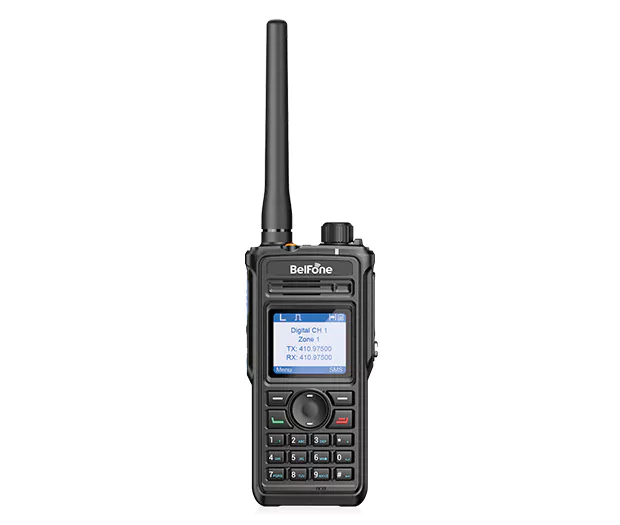
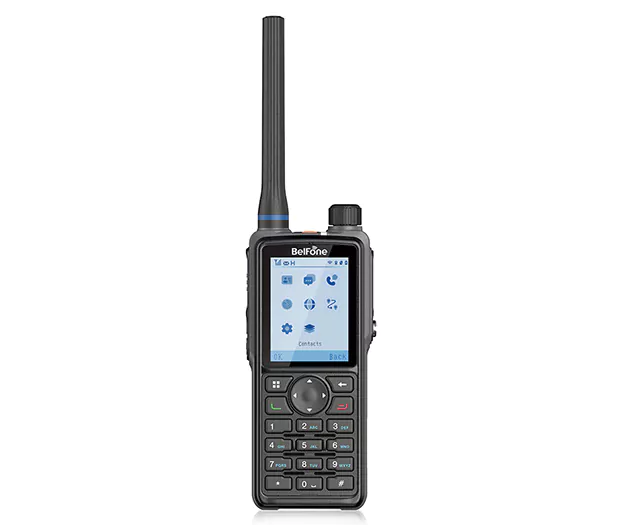
Real-time on-site collaborative dispatch is the core function of wireless communications during the emergency phase. In frontline scenarios such as rubble search and rescue, personnel evacuation, and hazard inspection, DMR digital walkie-talkies and portable self-organizing network devices can rapidly achieve full interconnectivity among all personnel without relying on any ground-based communication infrastructure. When operating in complex terrain, confined rubble, or remote disaster areas, rescue workers can transmit critical information in real time—such as on-site road conditions, the locations of trapped individuals, and hazard points—while rear command personnel can simultaneously issue search and rescue directives, adjust rescue plans, and allocate human and material resources. This zero-delay, highly reliable voice and data communication completely resolves the problems of "being unable to see, unable to call, and unable to connect" at disaster sites, enabling fragmented rescue forces to form a unified whole, significantly improving search and rescue efficiency, and minimizing casualties.
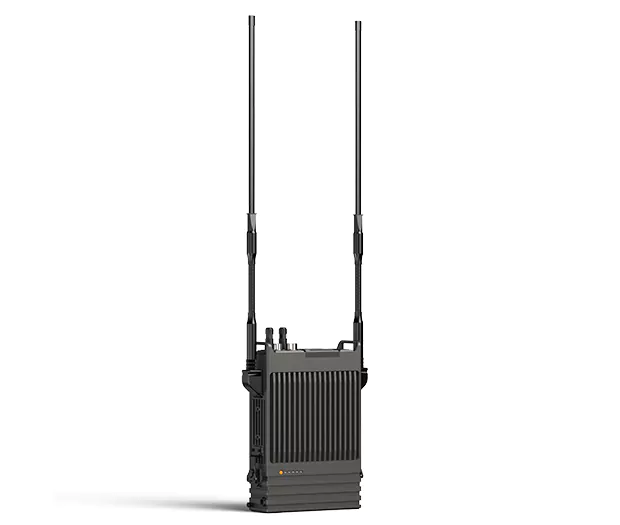
Remote disaster information backhaul and overall command are critical supports for emergency decision-making. When facing a large-scale disaster area, the rear command center cannot intuitively grasp the extent of on-site damage, the condition of destroyed buildings, areas where people are gathered, or the risks of secondary disasters. Through Mesh self-organizing networks, portable emergency base stations, satellite wireless communications, and other equipment, rescue personnel can transmit real-time high-definition video, images, and geotagged data from the scene back to the command platform. Based on accurate frontline data, command authorities can rapidly assess the disaster situation, precisely delineate severely affected areas, resettlement zones, and danger zones, and scientifically coordinate the deployment of cross-regional rescue teams, medical resources, and relief supplies. This avoids blind rescue operations and resource waste, enabling a shift from "passive disaster relief" to "precision rescue" and making emergency command decisions more scientific and efficient.
In addition to professional rescue dispatch, wireless communications also shoulder the important public welfare responsibility of reassuring the public and evacuating affected populations. After a sudden disaster, affected residents are highly prone to panic and anxiety due to losing contact and lacking information, and may even resort to blind escape or chaotic gathering—dangerous behaviors. Emergency wireless broadcasting and portable communication terminals can rapidly achieve coverage across the entire affected area, continuously broadcasting key information to the public, including evacuation routes, the locations of temporary resettlement sites, supply distribution policies, aftershock warnings, and rescue progress. This helps promptly address public concerns and stabilize social order. At the same time, portable emergency public network equipment can quickly restore local mobile phone signals, enabling affected residents to contact their families in a timely manner, alleviating psychological pressure, and shoring up the livelihood defense line at the disaster scene.
Furthermore, wireless communications provide real-time data support for early warning of secondary disasters. After a natural disaster, the risk of secondary disasters such as landslides, river flooding, dam breaches, and aftershocks is extremely high, posing a constant threat to the lives of rescue workers and affected residents. By leveraging wireless sensor monitoring devices in conjunction with wireless transmission networks, monitoring points can be rapidly deployed in hazardous areas such as mountainsides, river channels, and slopes to collect real-time data on displacement, water levels, and geological changes and transmit them back synchronously. Once abnormal data is detected, warnings can be issued immediately, allowing sufficient time for emergency evacuation and hazard response, effectively preventing casualties from secondary disasters.
In summary, during the golden phase of disaster emergency rescue, wireless communications serve as the core lifeline running through rescue command, frontline operations, livelihood support, and risk prevention and control. It compensates for the shortcomings of traditional communications in extreme disaster scenarios, closes the information loop in extreme environments, and provides solid safeguards for every precision rescue operation, every hazard avoidance, and every instance of order stabilization. It is an indispensable core infrastructure in emergency response to sudden disasters and a critical technological pillar for protecting lives and combating disasters.
The core objectives of disaster emergency response are to rapidly search for and rescue trapped individuals, identify hazards, dispatch rescue forces, and prevent secondary disasters. The prerequisite for all of these efforts is real-time, stable information exchange. Once the public network collapses, there is no longer a unified information channel at the scene, and multiple rescue teams—fire services, armed police, medical personnel, emergency repair crews, and grassroots emergency responders—can easily fall into operating in isolation, leading to overlapping rescue efforts, overlooked blind spots, and chaotic allocation of supplies, which greatly delays rescue operations. The rapid deployment of wireless communication equipment and emergency systems can break down information barriers in a short period of time, establishing a comprehensive on-site communication network that provides all-around support for emergency rescue operations.
Real-time on-site collaborative dispatch is the core function of wireless communications during the emergency phase. In frontline scenarios such as rubble search and rescue, personnel evacuation, and hazard inspection, DMR digital walkie-talkies and portable self-organizing network devices can rapidly achieve full interconnectivity among all personnel without relying on any ground-based communication infrastructure. When operating in complex terrain, confined rubble, or remote disaster areas, rescue workers can transmit critical information in real time—such as on-site road conditions, the locations of trapped individuals, and hazard points—while rear command personnel can simultaneously issue search and rescue directives, adjust rescue plans, and allocate human and material resources. This zero-delay, highly reliable voice and data communication completely resolves the problems of "being unable to see, unable to call, and unable to connect" at disaster sites, enabling fragmented rescue forces to form a unified whole, significantly improving search and rescue efficiency, and minimizing casualties.
Remote disaster information backhaul and overall command are critical supports for emergency decision-making. When facing a large-scale disaster area, the rear command center cannot intuitively grasp the extent of on-site damage, the condition of destroyed buildings, areas where people are gathered, or the risks of secondary disasters. Through Mesh self-organizing networks, portable emergency base stations, satellite wireless communications, and other equipment, rescue personnel can transmit real-time high-definition video, images, and geotagged data from the scene back to the command platform. Based on accurate frontline data, command authorities can rapidly assess the disaster situation, precisely delineate severely affected areas, resettlement zones, and danger zones, and scientifically coordinate the deployment of cross-regional rescue teams, medical resources, and relief supplies. This avoids blind rescue operations and resource waste, enabling a shift from "passive disaster relief" to "precision rescue" and making emergency command decisions more scientific and efficient.
In addition to professional rescue dispatch, wireless communications also shoulder the important public welfare responsibility of reassuring the public and evacuating affected populations. After a sudden disaster, affected residents are highly prone to panic and anxiety due to losing contact and lacking information, and may even resort to blind escape or chaotic gathering—dangerous behaviors. Emergency wireless broadcasting and portable communication terminals can rapidly achieve coverage across the entire affected area, continuously broadcasting key information to the public, including evacuation routes, the locations of temporary resettlement sites, supply distribution policies, aftershock warnings, and rescue progress. This helps promptly address public concerns and stabilize social order. At the same time, portable emergency public network equipment can quickly restore local mobile phone signals, enabling affected residents to contact their families in a timely manner, alleviating psychological pressure, and shoring up the livelihood defense line at the disaster scene.
Furthermore, wireless communications provide real-time data support for early warning of secondary disasters. After a natural disaster, the risk of secondary disasters such as landslides, river flooding, dam breaches, and aftershocks is extremely high, posing a constant threat to the lives of rescue workers and affected residents. By leveraging wireless sensor monitoring devices in conjunction with wireless transmission networks, monitoring points can be rapidly deployed in hazardous areas such as mountainsides, river channels, and slopes to collect real-time data on displacement, water levels, and geological changes and transmit them back synchronously. Once abnormal data is detected, warnings can be issued immediately, allowing sufficient time for emergency evacuation and hazard response, effectively preventing casualties from secondary disasters.
In summary, during the golden phase of disaster emergency rescue, wireless communications serve as the core lifeline running through rescue command, frontline operations, livelihood support, and risk prevention and control. It compensates for the shortcomings of traditional communications in extreme disaster scenarios, closes the information loop in extreme environments, and provides solid safeguards for every precision rescue operation, every hazard avoidance, and every instance of order stabilization. It is an indispensable core infrastructure in emergency response to sudden disasters and a critical technological pillar for protecting lives and combating disasters.
Related Products





Technical support: Longcai Technology
